How to Make Flash USDT and What Is the Working Method
· based on the channel Rca FastPrint
Flash USDT is a method to create a form of USDT token quickly using smart contract tools and blockchain interfaces. This process involves deploying an ERC20 token contract and interacting with it through wallet software such as MetaMask, enabling users to test and simulate transactions with Flash USDT tokens.
What Is Flash USDT and How Does It Work
Flash USDT refers to a quick-creation USDT-like token implemented on the Ethereum blockchain using smart contracts. It mimics the behavior of Tether's USDT token but is generated through custom ERC20 contracts for testing or development purposes. The method involves writing and deploying smart contract code that defines the token's parameters, such as name, symbol, total supply, and decimals.
The key to Flash USDT is the use of the ChainIDE platform, which provides an integrated development environment for Ethereum smart contracts. Developers use ChainIDE to write Solidity code, compile, and deploy their Flash USDT contract. MetaMask acts as the bridge between the contract and the user's wallet, allowing token transactions and balance viewing.
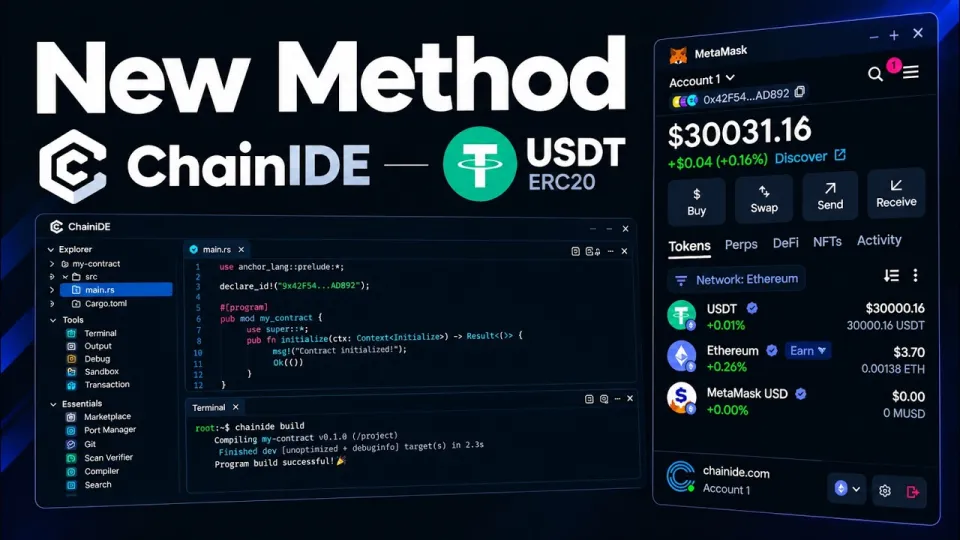
Video: How to Make Flash USDT | Working Method 2026
Setting Up ChainIDE and MetaMask for Flash USDT Creation
To create Flash USDT, first set up ChainIDE, a cloud-based Solidity IDE:
- Visit the ChainIDE website and sign up or log in.
- Create a new Solidity project and input the Flash USDT ERC20 token smart contract code.
- Compile the contract using the built-in compiler.
- Connect MetaMask to the Ethereum test network (e.g., Ropsten, Goerli) to ensure safe testing.
- Deploy the contract via ChainIDE using MetaMask wallet authorization.
MetaMask wallet must be installed as a browser extension and configured to the same network as ChainIDE. It manages private keys and signs transactions, enabling interaction with deployed Flash USDT tokens.
Understanding the ERC20 Token Structure in Flash USDT
The Flash USDT token follows the ERC20 token standard, which defines a common interface for fungible tokens on Ethereum. Key components include:
- Name and Symbol: Identifiers for the token (e.g., "Flash USDT", symbol "fUSDT").
- Decimals: Number of decimal places for token divisibility, usually 18.
- Total Supply: The total number of tokens minted initially.
- Balance Mapping: Tracks balances of each wallet address.
- Transfer Functions: Enable sending tokens between addresses.
- Approve and TransferFrom: Allow delegated transfers via allowances.
The smart contract code defines these parameters and includes functions to mint, transfer, and approve tokens. This standard ensures compatibility with wallets and exchanges supporting ERC20 tokens.
Interacting with Flash USDT Tokens Using MetaMask
Once the Flash USDT contract is deployed, users can interact with it through MetaMask:
- Add the Flash USDT token contract address to MetaMask to view token balances.
- Use MetaMask to initiate token transfers to other wallet addresses.
- Approve spending or interact with other smart contracts using Flash USDT tokens.
MetaMask displays token balances and transaction history, providing a user-friendly wallet interface. It also prompts users to confirm transactions and shows gas fees required for Ethereum network operations.
Common Mistakes and Verification Steps Before Using Flash USDT Contracts
When working with Flash USDT, avoid these pitfalls:
- Sending real funds to unverified or unknown contracts.
- Deploying contracts on the main Ethereum network without thorough testing.
- Ignoring gas fee estimates leading to failed transactions.
- Overlooking contract source code review and security audits.
Verification steps include:
- Confirming the contract address matches the deployed Flash USDT token.
- Reviewing the Solidity source code for malicious or faulty logic.
- Testing contract interactions on Ethereum testnets before mainnet deployment.
- Ensuring MetaMask network settings correspond to the contract's deployment network.
Tools and Resources for Flash USDT Development
The primary tools include:
- ChainIDE: Online Solidity IDE for coding, compiling, and deploying smart contracts.
- MetaMask: Browser-based Ethereum wallet for signing transactions and managing tokens.
Additional resources:
- Flash USDT ChainIDE script and guide: https://sites.google.com/view/defiflashusdt
- Telegram community for support: @erdincrca
These tools and resources help developers and testers create, interact, and experiment with Flash USDT tokens safely and effectively.
Useful Links
Conclusion
Flash USDT is a method to create a simulated USDT token using Ethereum smart contracts, primarily for educational and testing purposes. By leveraging ChainIDE and MetaMask, users can write, deploy, and interact with ERC20-compliant Flash USDT tokens on Ethereum test networks. This process requires careful contract verification and network configuration to avoid risks. The detailed workflow from coding to wallet interaction provides valuable insight into how ERC20 tokens operate.
For a comprehensive step-by-step walkthrough and the latest tools, refer to the detailed guide by the Rca FastPrint channel and visit their official resource page linked above. This ensures you follow a verified and safe approach to working with Flash USDT tokens.
Key takeaways
- Flash USDT is created using smart contracts on Ethereum blockchain.
- ChainIDE and MetaMask are essential tools for the Flash USDT workflow.
- Flash USDT uses ERC20 token standards for token creation and interaction.
- The method involves smart contract development, testing, and wallet integration.
- Always verify contract details and never send real funds to unknown contracts.
Source: How to Make Flash USDT | Working Method 2026 · Markdown version
Questions & answers
What is Flash USDT?
Flash USDT is a quickly created USDT-like token based on the ERC20 standard, deployed on Ethereum test networks for development and testing purposes.
Which tools are used to create Flash USDT?
Creating Flash USDT requires ChainIDE for smart contract development and MetaMask as the wallet interface to deploy and interact with the token.
Is it safe to use Flash USDT for real transactions?
No, Flash USDT is intended for educational and testing use only. Avoid sending real funds to unknown or unverified contracts.
How can I verify the Flash USDT contract before interaction?
You should review the contract source code, confirm the contract address, test on Ethereum testnets, and ensure your wallet network matches the contract deployment network.