How to Trade Meme Coins Like a Pro Using a Live Challenge Format
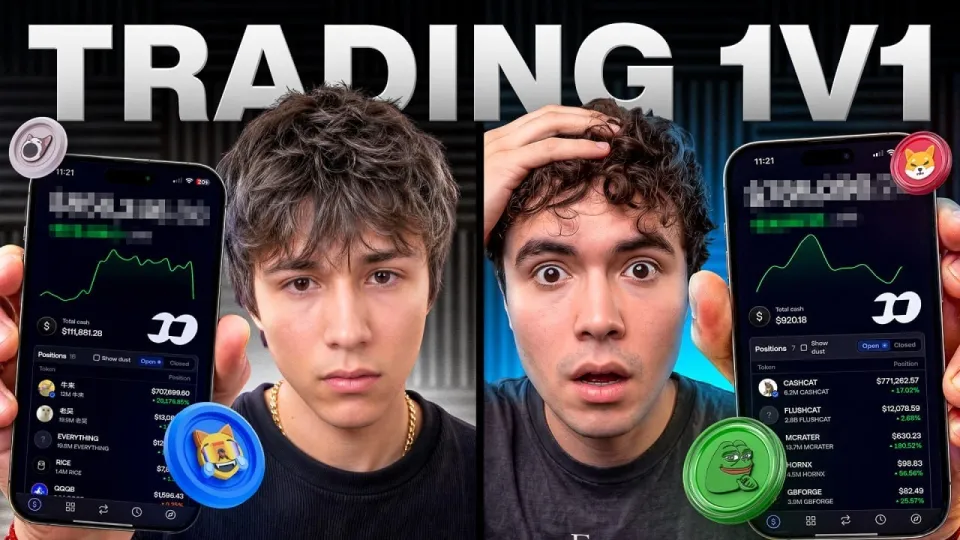
Video: I Challenged A Pro Memecoin Trader (Who Won?)
Need articles like this for your video? They help promote it on YouTube and Google — order them in the Telegram bot @sat_sit_bot. Articles with your video embedded are written and posted by the bot itself — on popular topical sites (no ads). Your first 50 articles are free.
· based on the channel insentos
Meme coin trading is short-horizon speculation on tokens with no cash flow, where the edge comes from speed, position sizing and a written exit plan rather than from fundamentals. To trade meme coins like a pro, you predefine how much you risk per attempt, enter only on confirmed liquidity and momentum, and cut a position the moment the reason for the trade disappears. The insentos challenge video, where a guest trader talks through decisions live, is a useful template for that workflow; registration and community access are available via FOMO.
The format matters more than any single call. Watching someone narrate entries and exits in real time shows the part that screenshots never capture: hesitation, sizing changes and the moment a trade is abandoned.
What a meme coin challenge actually tests
A meme coin challenge tests discipline under time pressure, not prediction accuracy. In the insentos video a professional trader is put against the host on live markets, and the informative value comes from hearing the reasoning aloud while the position is open.
Three things separate a professional from a beginner in that setting:
- A fixed risk unit. Each attempt is sized so that a total loss does not change the account's trajectory. Beginners usually size by conviction, which is highest right before the worst entries.
- A stated invalidation. Before entering, the trader knows which price or liquidity condition proves the thesis wrong. Without it, a loss becomes a long-term holding by accident.
- A time budget. Meme coins decay fast; a position that has not worked within the expected window is closed even at break-even, freeing capital and attention.
A challenge also exposes the difference between the two participants' information flow. One is watching charts and order flow; the other is also answering questions, which is exactly the multitasking condition most retail traders face when they trade from a phone.
The meme coin trading stack used in the video
The tooling is deliberately minimal: an execution terminal, a community feed and a way to track wallets. The video description points to Axiom as the trading terminal and to FOMO for the community side.
- Execution terminal (Axiom). Solana-focused interfaces aggregate liquidity across venues, show holder distribution and let you set slippage and priority fees. On Solana, priority fees determine whether your transaction lands during a spike.
- Community feed (FOMO). Group chats and calls compress discovery time, but they also compress the time available to think. Treat a call as a lead to verify, not as an entry signal.
- Wallet tracking. Following profitable wallets is only useful if you can distinguish a fresh accumulation from an exit into your buy.
- Charting and alerts. Price alerts on liquidity removal and holder-count changes often matter more than price alerts alone.
Whatever the interface, the same three parameters decide the outcome of a trade: entry price, size and exit rule. The terminal only changes how fast you can act on them.
How to trade meme coins without blowing up the account
Risk control is the only part of meme coin trading that compounds reliably. A practical routine looks like this:
- Define the bankroll. Carve out a separate amount you can lose entirely. Do not refill it mid-session; refilling after a loss is how one bad hour becomes a bad month.
- Cap single-trade risk at 1–2% of that bankroll. With tokens that can drop 80% in minutes, a 2% risk unit means a 50% drawdown on one position is still survivable.
- Split entries. Take a starter position on the first confirmation and add only after the market proves the thesis, never to average down a loser.
- Scale out on the way up. Selling 30–50% into the first strong move locks in the trade and removes the emotional pressure that causes the rest to be mismanaged.
- Stop for the day after a defined loss limit. Two or three failed attempts in a row usually indicate the market regime has changed, not that the next coin is due.
Slippage belongs in the same calculation. On thin Solana pairs, a 10–15% slippage setting can turn a profitable exit into a loss, so liquidity depth should be checked before size, not after.
Reading momentum, liquidity and holder structure
Momentum without liquidity is a trap, and liquidity without distribution is a slow bleed. Before any entry, check three things on the token page:
- Liquidity depth relative to your size. If your order is a meaningful share of the pool, you are the exit liquidity for someone else.
- Holder concentration. A handful of wallets holding a large supply can exit in one transaction. Tools that flag bundles and sniper wallets exist for this reason.
- Volume pattern. Organic growth shows steady, distributed buying; a vertical spike on one wallet's orders usually reverses just as fast.
On Solana specifically, memecoin launches are cheap and fast, which means the supply of new tokens is effectively unlimited. Scarcity is not in the token, it is in attention. That is why narrative and community speed matter more than any technical indicator on a five-minute chart.
Questions beginners keep asking about meme coin trading
Beginners consistently raise the same doubts, and they are the right ones to ask. The most common is whether anyone actually makes money in this format: the honest answer is that gains are concentrated in a small share of participants, and most of the visible wins come from traders who size small and cut fast.
The second recurring theme is influencer advantage. A trader with a large audience can move a small-cap token simply by posting, so copying their entries without their distribution is a different, worse trade. The third is access: community groups are often gated or invite-only, which makes the free public content the most reliable learning material for someone starting out. The fourth is format preference — viewers repeatedly ask for more live, narrated sessions rather than highlight reels, because the thinking between trades is where the lessons are.
A useful exercise after watching any such session is to write down, before the next trade, the entry, the size and the exit condition, then compare what actually happened with the plan. That feedback loop is worth more than another hour of watching.
Useful links
- FOMO — registration and community access
- Axiom trading terminal
- insentos on X
- insentos on Instagram
- insentos on TikTok
Final thoughts on learning from live meme coin sessions
Live challenge formats are valuable because they show the unglamorous parts of meme coin trading: hesitation, small size, quick exits and trades that are simply skipped. The insentos channel builds its content around that transparency, pairing a professional guest with a host who asks the questions a beginner would ask. Use the sessions as a template for your own process, not as a signal service, and keep the risk unit fixed regardless of how confident a call sounds. If you want to follow along with the same tools, start with FOMO and paper-trade the workflow before committing real capital.
Key takeaways
- Meme coin trading is short-horizon speculation: entries and exits are decided in seconds, not weeks.
- The insentos challenge video trades live on stream and pairs every trade with an explanation of the thought process.
- Tools named in the video: Axiom (axiom.trade) for execution and FOMO (fomo.family) for community access.
- Most of the edge comes from position sizing and pre-set invalidation levels, not from picking the perfect coin.
- Audience feedback shows beginners want strategy breakdowns, not just profit screenshots.
Source: I Challenged A Pro Memecoin Trader (Who Won?) · Markdown version
Questions & answers
Can you actually make money trading meme coins?
Yes, but the distribution is heavily skewed: a small share of traders capture most of the gains, and many participants lose their entire risk unit. Profitable traders usually size each attempt at a small fixed percentage of their bankroll and exit quickly when the thesis fails, rather than holding for a large multiple.
Is copying a professional trader's entries a good strategy?
Usually not. A trader with a large following can move a small-cap token just by posting, so their entry price and liquidity are different from yours. Copying the call without their size, exits and audience gives you the worst part of the trade.
Which tools do I need to start trading Solana meme coins?
At minimum an execution terminal that shows liquidity and holder distribution, a wallet with a small dedicated bankroll, and price or liquidity alerts. The insentos video references Axiom as the trading terminal and FOMO for community access; both are linked in the description.
How much should a beginner risk on a single meme coin?
A common rule is 1–2% of a bankroll you can afford to lose entirely, with the total daily loss capped at a few percent. Because these tokens can fall 80% within minutes, position size protects the account far more reliably than any entry signal.